
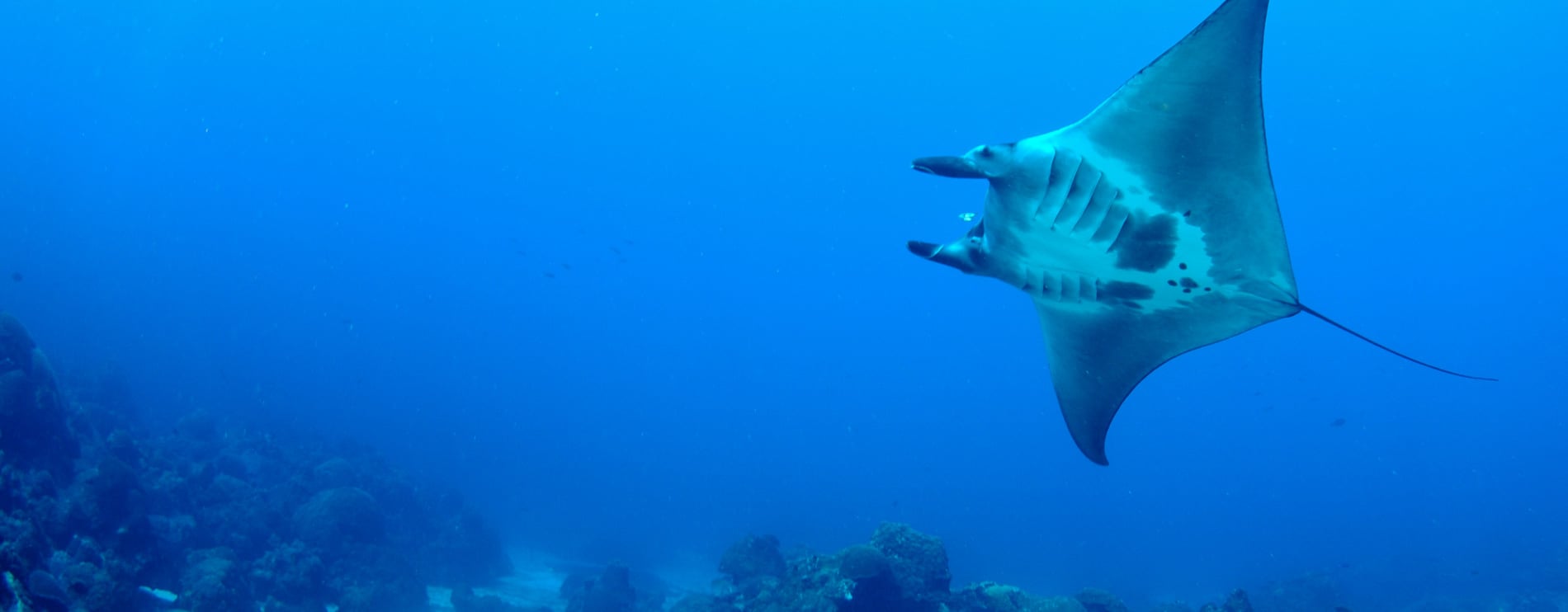
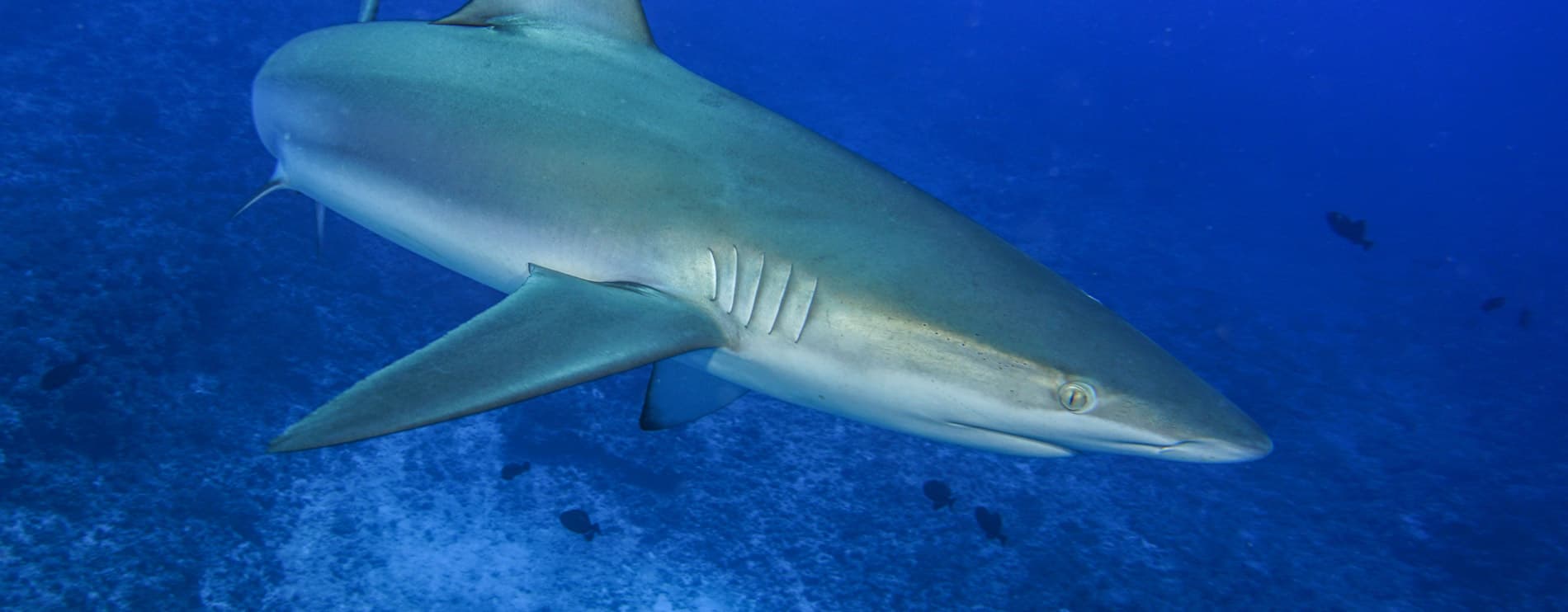
To understand the biology and ecology of threatened and data deficient elasmobranch species as well as understand their trade and the perception of stakeholders on the importance of elasmobranchs and increase awareness in order to enhance conservation.
CERECON
SPOT PROJECTS Sharks & Rays
Cyprus Elasmobranch Research and Conservation Network
AIM OF THE PROJECT01 / OVERVIEW
THE PROJECT02 / OBJECTIVES
OBJECTIVES
- 01
To enhance knowledge
on the relative (in Mediterranean and Global terms) diversity and abundance of elasmobranch species occurring in Cyprus waters.
- 02
To understand the preferred benthic habitats of key threatened species,
identify important benthic assemblages and prey species (through dietary analyses) of elasmobranchs in the waters of Cyprus.
- 03
To understand elasmobranch phenology, reproductive patterns and connectivity and phylogeny of Angel Sharks
in a regional context.
- 04
To feed these data into holistic bycatch management plans
under the umbrella of the MAVA M4 Cyprus Bycatch Project and using existing advocacy materials translated to local languages.
- 05
To understand the perception of stakeholders
on the importance of elasmobranchs and increase awareness in order to enhance conservation.
- 06
To propose conservation measures
based on our findings through a peer-reviewed publication and feed results into MAVA M4 bycatch projects.
THE PROJECT
DURATION
06/09/2019 – 26/12/2020
FUNDED
MAVA Foundation
CO-FUNDED
The Shark Trust Zoological Society of London
PARTNER
Enalia Physis
THE PROJECT04 / RESULTS
Project successes
- Observations made of 104 fishing operations during 75 fishing days from 15 fishing shelters across Cyprus. Fishing practices and metiers described. Catch per Unit Effort calculated for 16 elasmobranch species, totalling 166 records, with high proportion of threatened or data deficient species. New records for some areas of the island.
- Elasmobranch survival rates in set nets and on longlines observed are high, but most are retained against international conventions protecting them.
- Five hundred and sixty-four individuals of 28 species were recorded opportunistically with 265 examined for reproductive status, pregnancy, sex, morphometrics and diet.
- Interviews undertaken with nearly 200 professional fishers to understand elasmobranch trade and economics and their knowledge of international protective legislation. Assessment made of the diversity of elasmobranchs encountered and local extinctions.
- Online public survey to assess ecological knowledge and attitude toward elasmobranchs.
- Awareness campaign through local and social media including animated illustrations.
- Shark Trust advisory materials translated to local languages and made available online.
- Action plans written for angel sharks to guide stakeholders.
- Proposed conservation measures include marine protected areas, for the list of non-tradable species in the Turkish Cypriot community to be increased to reflect international norms, a short training course for professional fishers to identify, handle and safely release protected species.
PROJECT DOCUMENTS05 / DOCUMENTS
ADVISORY MATERIALS
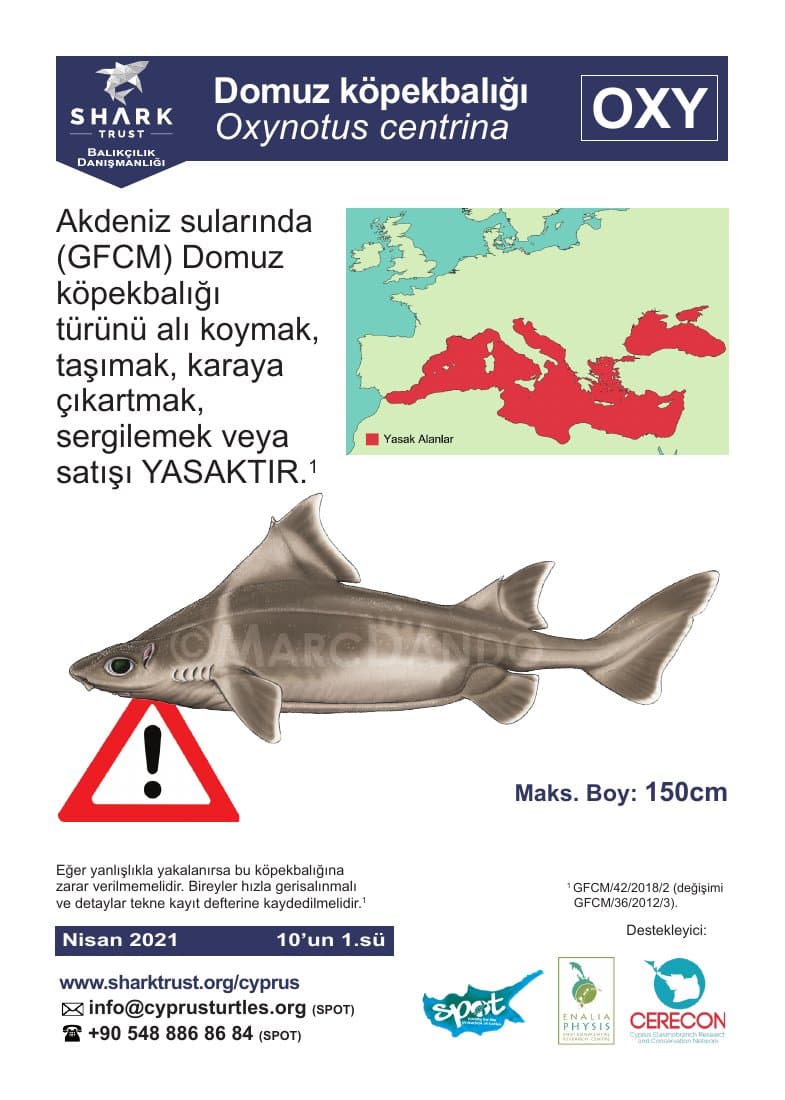
Advisory material, Turkish01 / 10
Angular Roughshark – Oxynotus centrina
OPEN DOCUMENT Angular Roughshark – Oxynotus centrina (PDF, opens in a new tab)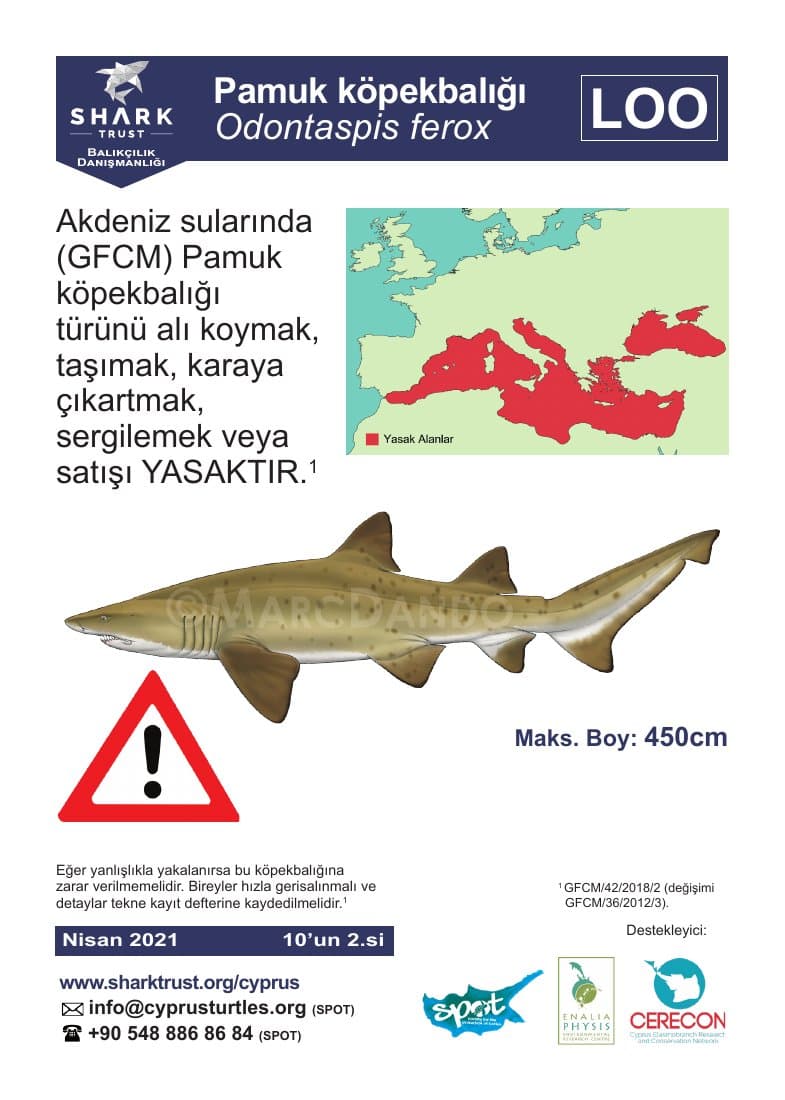
Advisory material, Turkish02 / 10
Smalltooth Sandtiger – Odontaspis ferox
OPEN DOCUMENT Smalltooth Sandtiger – Odontaspis ferox (PDF, opens in a new tab)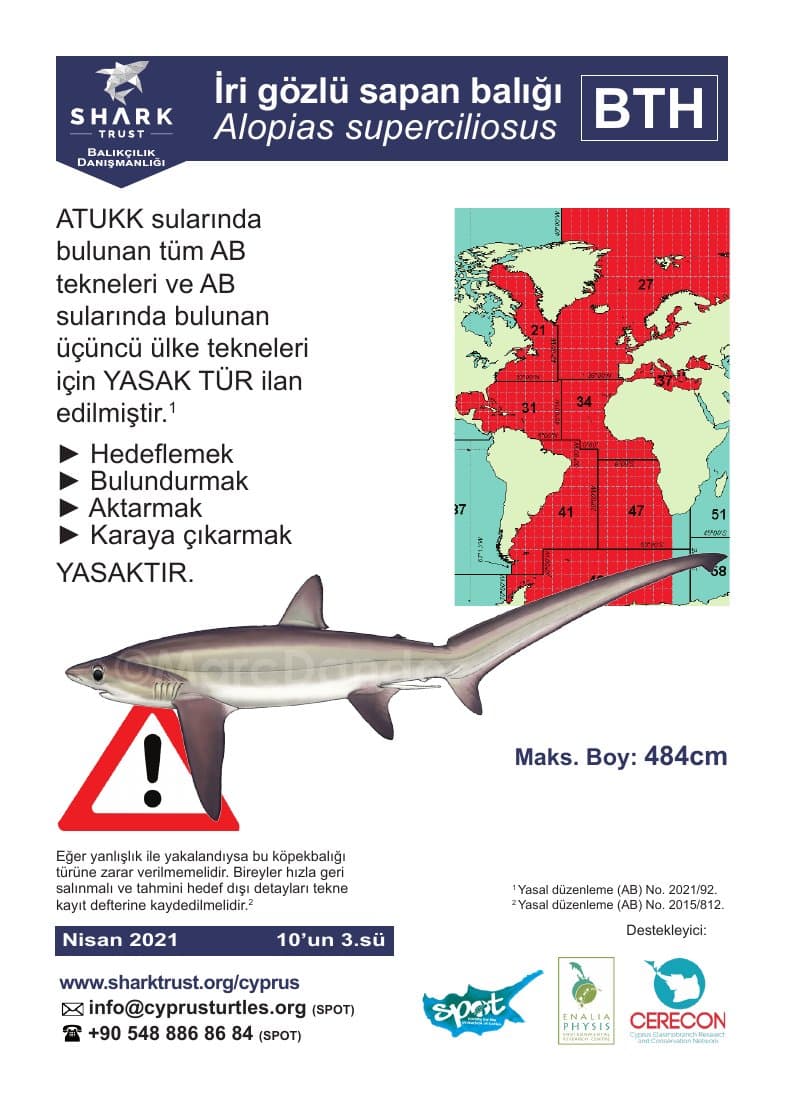
Advisory material, Turkish03 / 10
Bigeye Thresher – Alopias superciliosus
OPEN DOCUMENT Bigeye Thresher – Alopias superciliosus (PDF, opens in a new tab)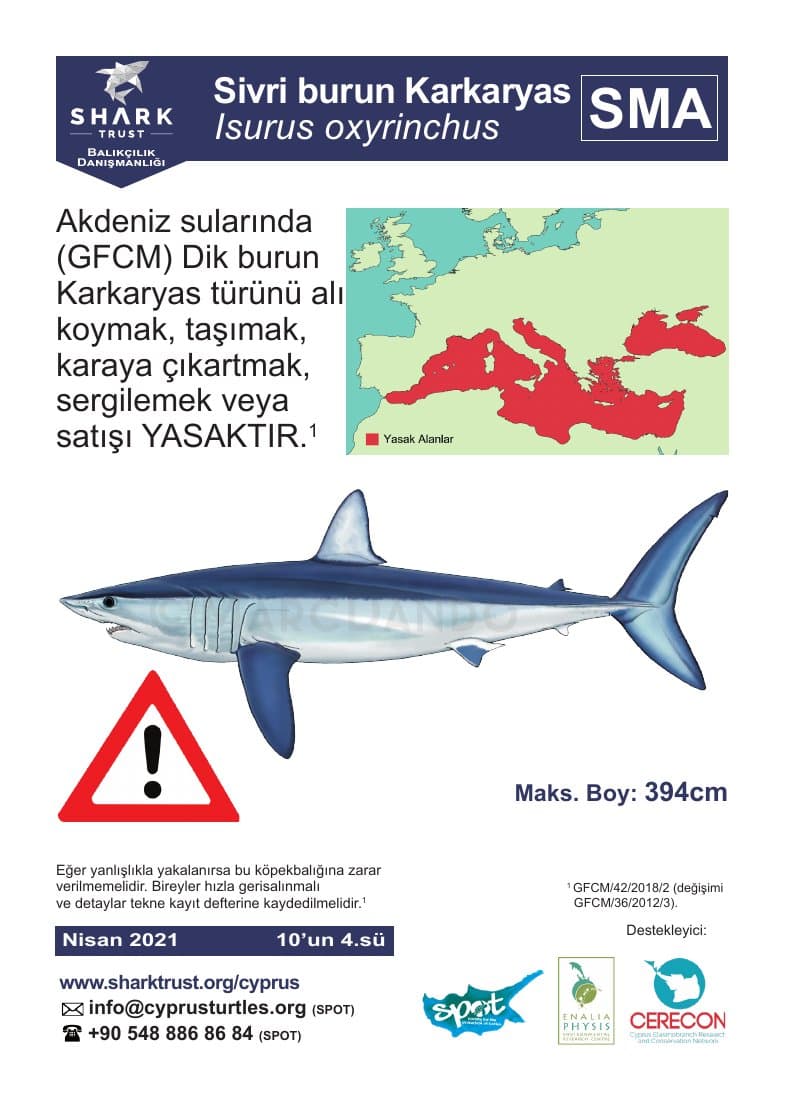
Advisory material, Turkish04 / 10
Shortfin Mako – Isurus oxyrinchus
OPEN DOCUMENT Shortfin Mako – Isurus oxyrinchus (PDF, opens in a new tab)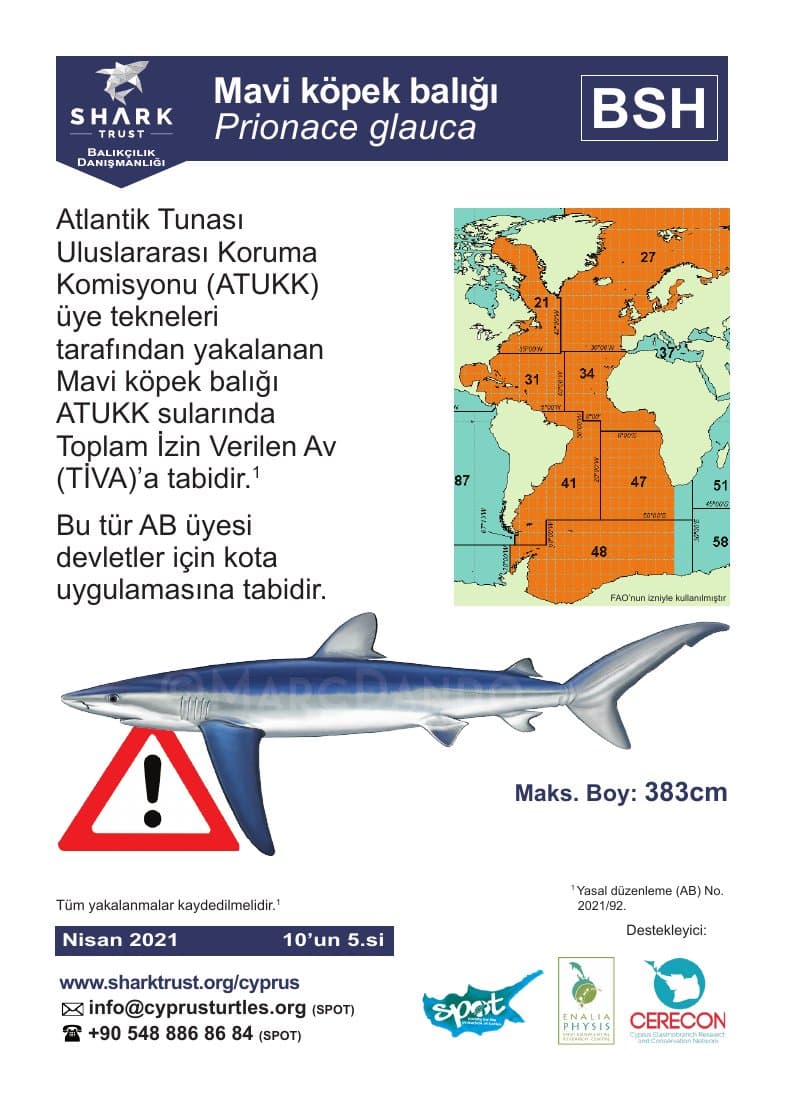
Advisory material, Turkish05 / 10
Blue Shark – Prionace glauca
OPEN DOCUMENT Blue Shark – Prionace glauca (PDF, opens in a new tab)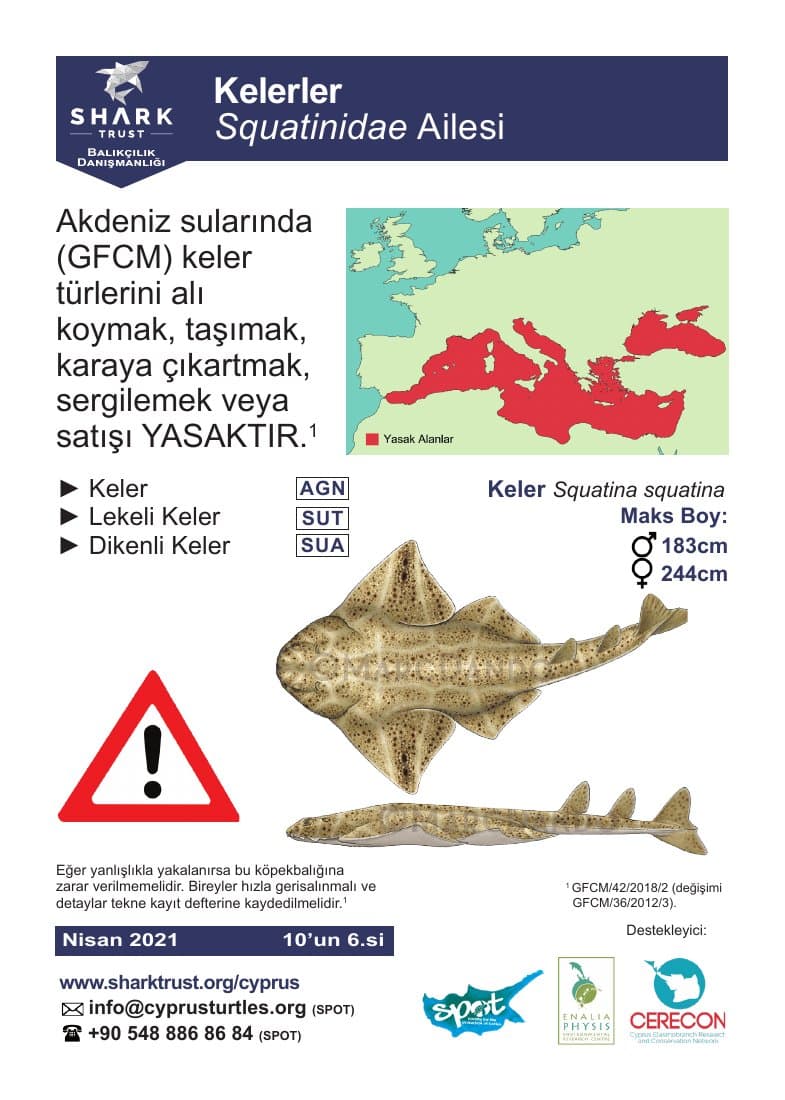
Advisory material, Turkish06 / 10
Angel Sharks – Squatinidae
OPEN DOCUMENT Angel Sharks – Squatinidae (PDF, opens in a new tab)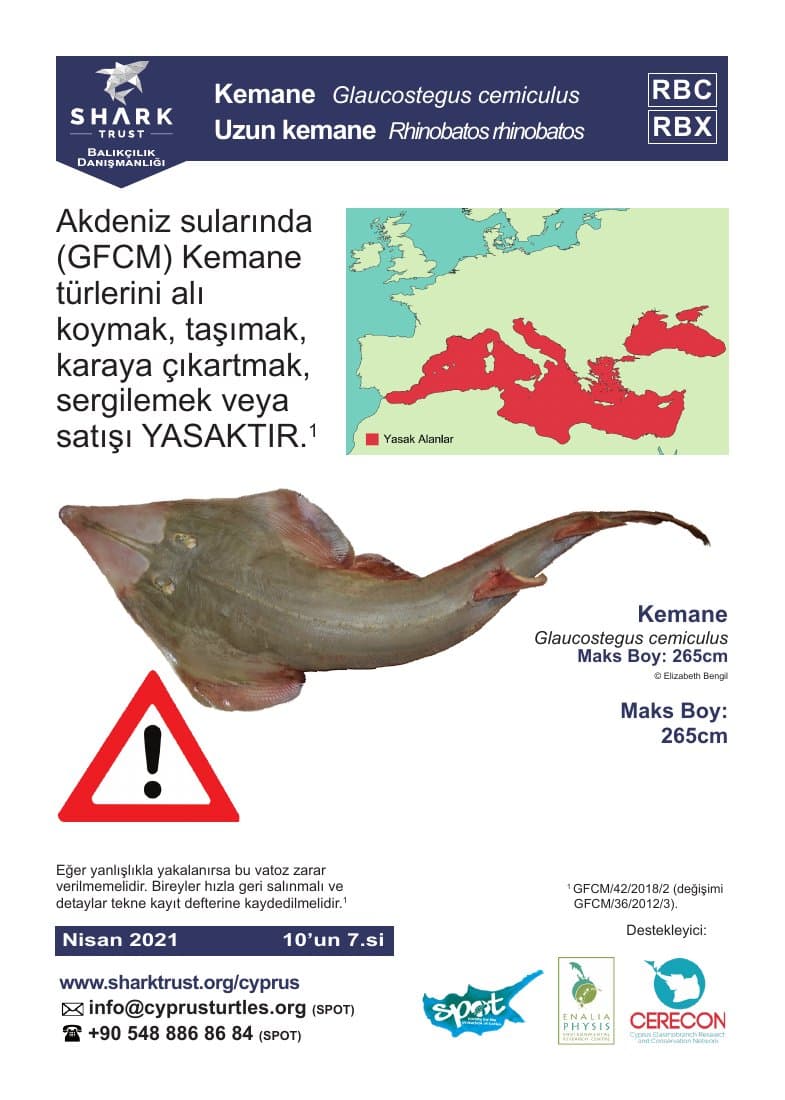
Advisory material, Turkish07 / 10
Guitarfishes – Rhinobatidae
OPEN DOCUMENT Guitarfishes – Rhinobatidae (PDF, opens in a new tab)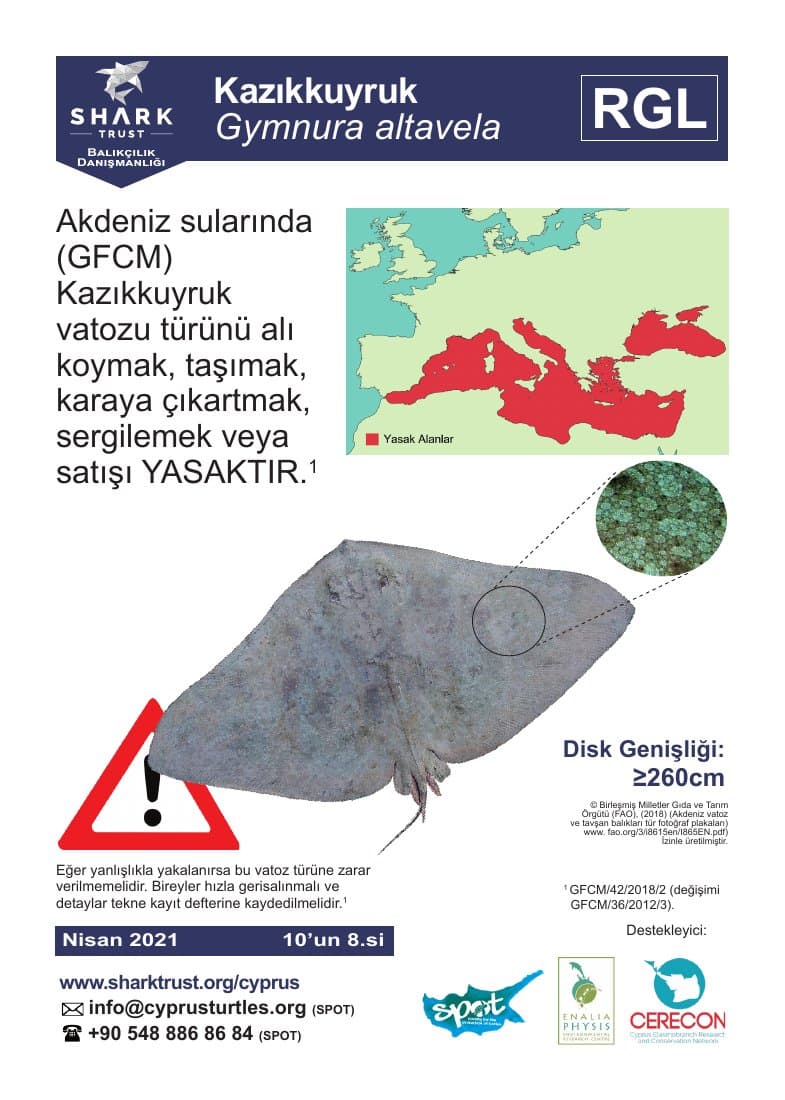
Advisory material, Turkish08 / 10
Spiny Butterfly Ray – Gymnura altavela
OPEN DOCUMENT Spiny Butterfly Ray – Gymnura altavela (PDF, opens in a new tab)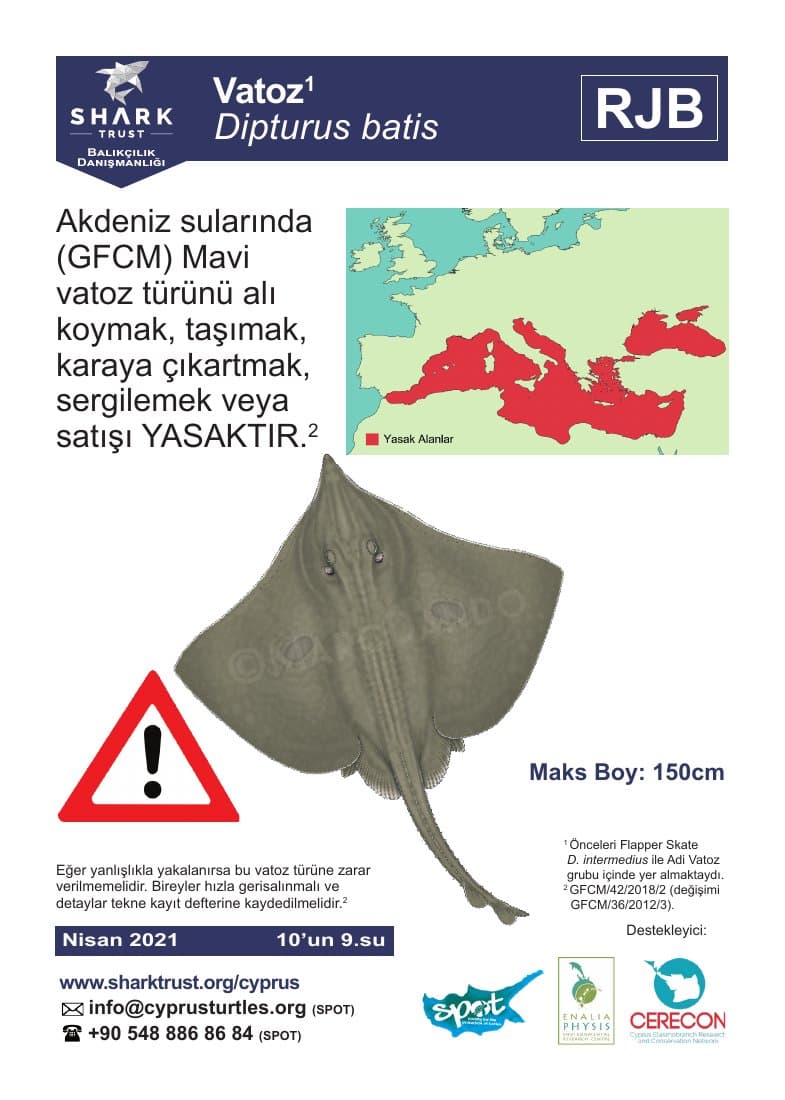
Advisory material, Turkish09 / 10
Blue Skate – Dipturus batis
OPEN DOCUMENT Blue Skate – Dipturus batis (PDF, opens in a new tab)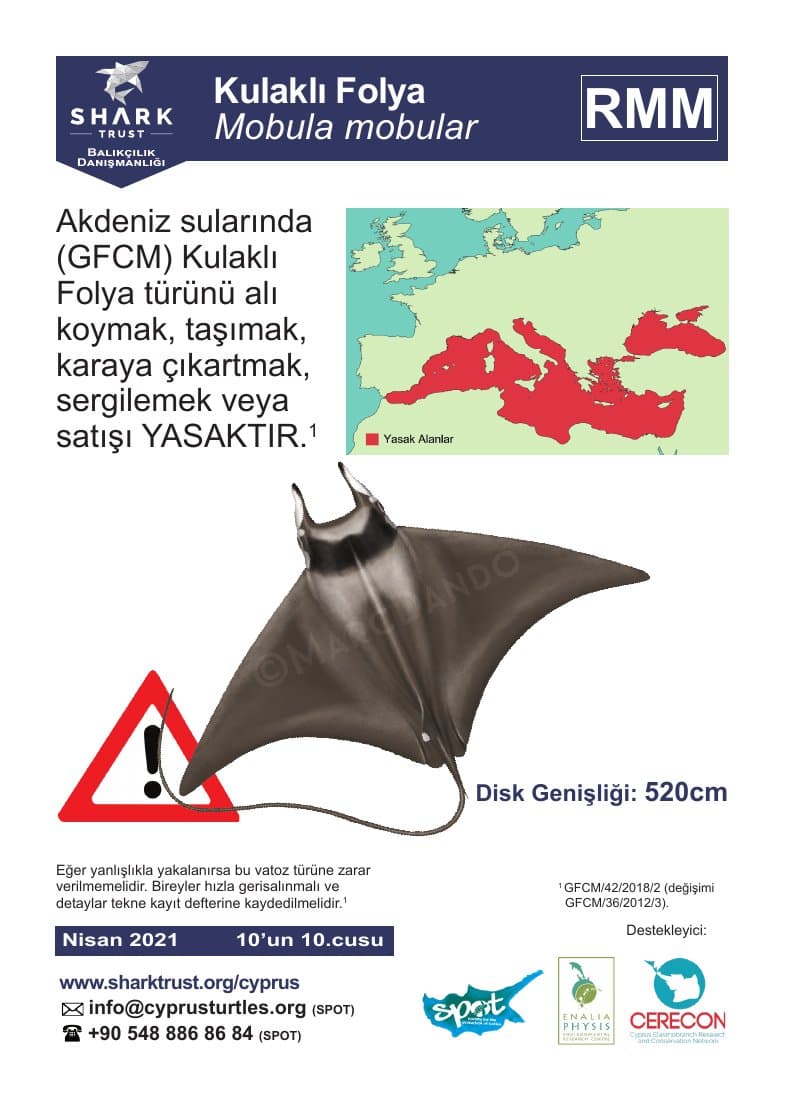
Advisory material, Turkish10 / 10
Giant Devil Ray – Mobula mobula
OPEN DOCUMENT Giant Devil Ray – Mobula mobula (PDF, opens in a new tab)COLLABORATORS06 / ORGANISATIONS
Organisations
 SPOT Marine Life
 Enalia Physis Environmental Research Centre
 Shark Trust
 MAVA Foundation
IN THE FIELD07 / IMAGE GALLERY
Photo gallery
05 photographs
Select a photograph to view the gallery.
- Fisher landing Squalus Blainville, which was caught in large numbers in deep sets targeting hake, often with many pregnant individuals. As a data deficient species, it seems abundant around Cyprus.PHOTO: OLKAN ERGÜLER
- This critically endangered shortfin mako was delivered to market in 2020. SPOT experts were permitted to examine the specimen prior to sale. One of many individuals recorded during CERECON project.PHOTO: SOCIAL MEDIA
- The captain of this boat called our team for the endangered green turtle which had drowned in his nets, but we just as interested to find a bull ray, guitarfish, and a mixture of marbled and common stingray.
- The key recommendation of the project is that the trade of protected species like this critically endangered angel shark is urgently prohibited. Extinct from much of the Mediterranean we are lucky to have angel sharks breeding in Cyprus waters and like other elasmobranchs, their ecological roles are important.PHOTO: ROBIN SNAPE
- Threatened species were often found to be used for bait.PHOTO: OLKAN ERGÜLER